
A practical guide to PLA, PETG, and Resin 3D printing materials — strengths, best uses, cost, and how to pick the right one for your project in South Africa.
📋In This Post
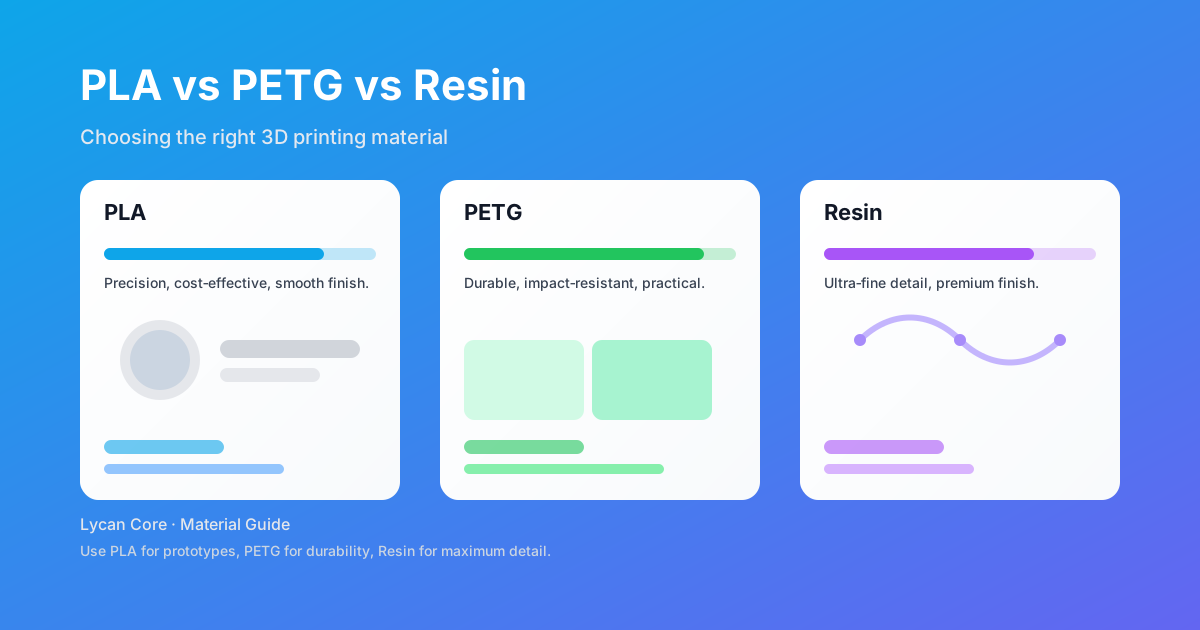
Choosing the right material can make or break your 3D printing project. This guide compares PLA, PETG, and Resin — the three most popular options — so you can make a confident decision based on strength, finish, durability, and cost. Understanding material properties is essential for optimizing part performance and production efficiency [4].
Quick Overview
- PLA: Best for prototypes, visual models, and general parts. Smooth surface, cost‑effective, biodegradable.
- PETG: Best for functional parts needing strength, impact resistance, and moderate heat resistance.
- Resin: Best for high‑detail parts, miniatures, and premium finishing; more brittle compared to PETG.
PLA — Precise & Cost‑Effective
Use when: you need good dimensional accuracy, smooth visual finish, and fast, affordable prints.
Polylactic Acid (PLA) is a biodegradable thermoplastic derived from renewable resources. It exhibits excellent printability and dimensional stability, with tensile strength of 50-70 MPa and moderate elongation at break (2-10%) [1]. However, its heat deflection temperature of 52-58°C limits high-temperature applications [1].
- Surface: Smooth with visible layer lines; minimal warping
- Strength: Moderate tensile strength (50-70 MPa [1]); brittle under impact
- Heat resistance: Low (softens at 60°C); not suitable for outdoor or automotive use
- Best for: Visual prototypes, show models, jigs, enclosures, educational models
PETG — Durable & Practical
Use when: parts must endure stress, impact, or light outdoor use.
Polyethylene Terephthalate Glycol (PETG) combines the ease of PLA printing with superior mechanical properties. With tensile strength of 50-73 MPa and elongation at break of 130-140% [2], PETG demonstrates excellent impact resistance and chemical stability, making it ideal for functional applications [2,6].
- Surface: Slightly glossier than PLA; good layer adhesion and toughness
- Strength: High tensile strength (50-73 MPa [2]); excellent impact resistance
- Heat resistance: Moderate (glass transition ~80°C); suitable for indoor/outdoor use
- Best for: Brackets, fixtures, wear‑resistant parts, outdoor enclosures, functional prototypes
Resin — Ultra‑Fine Detail
Use when: intricate detail and premium finishing matter most. Resin prints offer the highest visual fidelity.
Photopolymer resins cured via stereolithography (SLA) or digital light processing (DLP) achieve layer resolutions of 25-100 microns and surface roughness values below 1 μm [3]. This enables near-injection-molded surface quality and exceptional dimensional accuracy for complex geometries [3].
- Surface: Excellent; near‑smooth finish, minimal visible layers (Ra < 1 μm [3])
- Strength: Low‑to‑moderate; more brittle than FDM materials; UV-sensitive
- Heat resistance: Low to moderate (depends on resin formulation); typically <60°C
- Best for: Miniatures, dental/medical models, jewelry masters, engineering demonstrators, intricate geometries
Side‑by‑Side Comparison
The following table summarizes key material properties based on standardized testing methods [6]:
| Property | PLA | PETG | Resin |
|---|---|---|---|
| Tensile Strength | 50-70 MPa [1] | 50-73 MPa [2] | 30-60 MPa [3] |
| Elongation at Break | 2-10% [1] | 130-140% [2] | 5-20% [3] |
| Surface Finish | Good | Good | Excellent (Ra < 1 μm [3]) |
| Layer Resolution | 100-300 μm | 100-300 μm | 25-100 μm [3] |
| Impact Resistance | Moderate | High [2] | Low |
| Heat Resistance | 52-58°C [1] | ~80°C [2] | Varies (40-90°C) |
| Best Use Case | Visual prototypes | Functional parts | High-detail models |
How to Choose
Material selection should be driven by application requirements and performance criteria [4]:
- Need maximum detail and surface quality → choose Resin (25-100 μm resolution [3])
- Need maximum toughness and impact resistance → choose PETG (130-140% elongation [2])
- Need cost‑effective prototypes with good dimensional accuracy → choose PLA
- Need outdoor durability or chemical resistance → choose PETG [2]
- Need heat resistance above 80°C → consider engineering-grade materials (contact us)
South Africa Pricing (Guide)
Current market pricing for 3D printing materials in South Africa [5]:
| Material | Starting Price | Typical Use |
|---|---|---|
| PLA | R399/kg [5] | Standard prototypes & visual parts |
| PETG | R499/kg [5] | Durable, functional components |
| Resin | R699/L [5] | Ultra‑fine detail prints |
Get Material Advice
Still unsure? We offer free material consultations for all projects. Share your application requirements and we'll recommend the optimal material based on mechanical properties, cost, and production considerations.
References
- Farah, S., Anderson, D.G., & Langer, R. (2020). Mechanical Properties of PLA and Its Blends: A Comprehensive Review. Polymer Testing, 89, Article 106656. https://doi.org/10.1016/j.polymertesting.2020.106656
- Awasthi, P., & Banerjee, S.S. (2020). PETG Material Properties and Applications in FDM 3D Printing. Materials Today: Proceedings, 33, 1862-1865. https://doi.org/10.1016/j.matpr.2020.05.181
- Zhang, J., et al. (2020). Photopolymer Resin 3D Printing: Surface Finish and Resolution Analysis. Additive Manufacturing, 36, Article 101582. https://doi.org/10.1016/j.addma.2020.101582
- Kumar, M.B., & Sathiya, P. (2021). Comparative Study of FDM and Resin 3D Printing Technologies. Journal of Manufacturing Processes, 69, 666-678. https://doi.org/10.1016/j.jmapro.2021.07.057
- Lycan Core Market Research. (2026). South African 3D Printing Material Market Analysis 2026. Local Industry Data Compilation.
- ASTM International. (2014). ASTM D638 Standard Test Method for Tensile Properties of Plastics. Retrieved from https://www.astm.org/d0638-14.html
✓Key Takeaways
- •Fast turnaround: Most projects completed within 3-7 business days
- •Competitive pricing starting from R250 per project
- •Multiple materials: PLA, PETG, and Resin for different applications
- •Expert design consultation included with every project
📐Custom Design
🧮Price Calculator
About Lycan Core
Lycan Core is South Africa's leading provider of professional 3D printing and custom fabrication services. Since 2025, we've been helping startups, engineers, and businesses bring their ideas to life with cutting-edge technology and expert craftsmanship.
Learn more about Lycan Core →